
One of the great parts of being a Mason I have come to appreciate is taking part in the Festive Board. It is here our friendships are cemented for years to come. Within the Lodge room it is all about business and ceremony, whereas at the Festive Board it becomes all about friendship, laughter, and genuine socialising. It is a time for getting to know your fellow Brethren on a more personal level and discovering the human side of Freemasonry that ritual alone cannot show.
This article is written not only for my fellow brethren, especially those who are newly initiated and still discovering how the dining traditions fit into our wider Masonic life, but also for anyone outside the Craft who is curious about what we truly do once the formal Lodge business has concluded. The Festive Board is one of the most welcoming and enjoyable parts of Freemasonry, and it offers a very real glimpse into the atmosphere, warmth, and character of our fraternity.
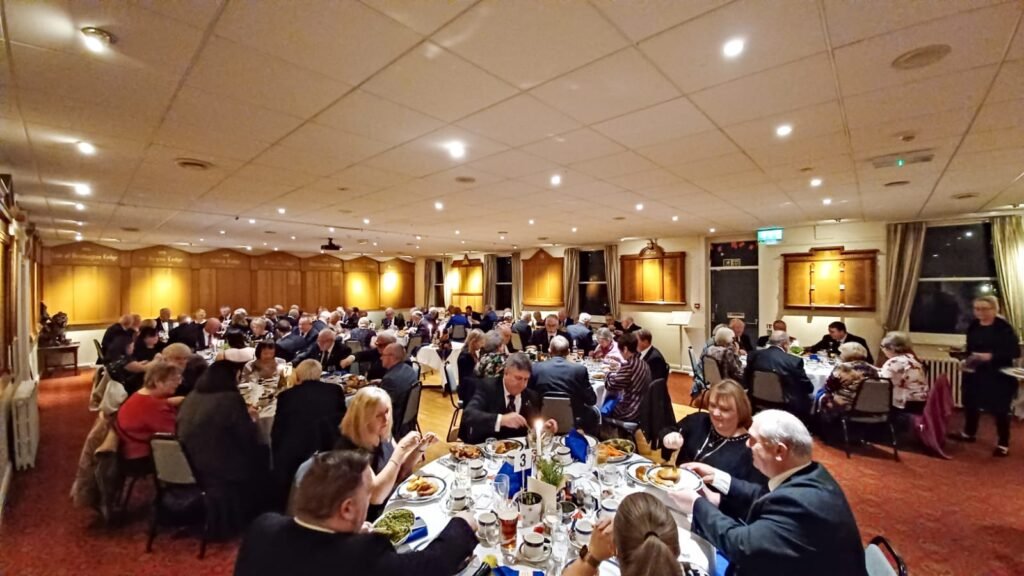
Throughout the year, many Lodges also hold White Table events, special evenings where non-Masons are invited to join us for the meal after the meeting. These events allow family, friends, and prospective candidates to experience the Festive Board for themselves. Without revealing any of the private elements of the Lodge room, a White Table gives guests a genuine feel for our camaraderie, our dining customs, our humour, and the social side of Masonry. For anyone wondering what Freemasonry is “really like,” a White Table evening is often the perfect introduction.
Within English Freemasonry, few traditions hold as much warmth, symbolism, and heartfelt camaraderie as the Festive Board. To some, it is simply “the meal after the meeting,” but to any Mason who has sat at one in good company, it is far more than that. The Festive Board is where the Lodge or Chapter breathes, relaxes, and connects. It is where ritual transforms into fellowship, where formality softens into laughter, and where bonds are built as naturally as breaking bread together.
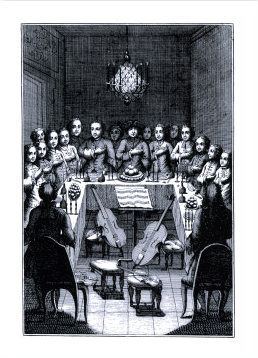
Even more profoundly, the Festive Board is one of the oldest surviving customs in the Craft. It links us directly to the early days of Freemasonry, not just in spirit, but in practice, because the very first organised Masonic meetings took place in taverns, ale-houses, and dining rooms where eating, drinking, and socialising were inseparable from the meeting itself.
In this article, we will explore the history of the Festive Board, the origins of our dining customs, the meaning behind the toasts and prayers, the importance of these evenings to the life of a Lodge or Chapter, and finally, a personal reflection on how one such evening unexpectedly highlighted my own growth, both as a Mason and as a person.
Origins of the Festive Board, Freemasonry’s Tavern Beginnings
Long before purpose-built Masonic halls existed, the earliest recorded lodges in England met in taverns such as the Goose and Gridiron, the Apple Tree Tavern, the Crown, and the Rummer and Grapes. These were not just meeting places, they were the heart of early Masonic life. Taverns provided private rooms upstairs for the meeting, ale and punch downstairs, and food for the brethren before, during, or after the lodge was opened.
We know this from the documented history of the Premier Grand Lodge of England, founded on 24 June 1717 at the Goose and Gridiron ale-house. This famous meeting, where four existing London lodges gathered, was followed by what was described as a “Grand Feast.” This tells us that:
Freemasonry began with a meeting and a meal.
Not one followed by the other, both were part of the same event.
Dining as an Established Part of Early Lodge Life
Throughout the 18th century, lodge accounts and early Masonic records consistently show payments for:
- food and ale
- punch bowls
- candles for the dining room
- tobacco and pipes
- hire of private rooms
Dining was woven into the Lodge’s expenses and identity. The brethren didn’t simply attend a meeting; they attended an evening, dining, discussion, and fellowship included. This is the earliest root of the modern Festive Board.
From Tavern Meal to Formal Tradition
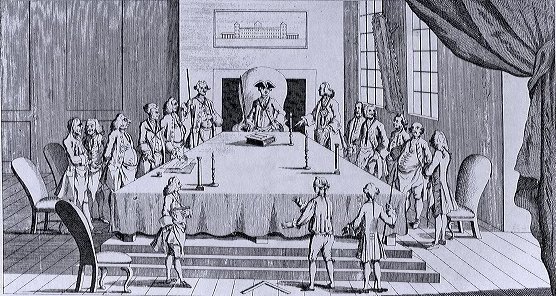
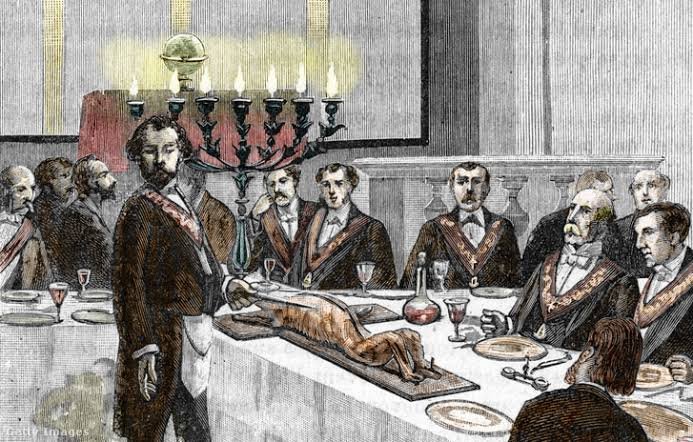
As Freemasonry expanded during the 18th and 19th centuries, many aspects of the Craft, including dining, became more structured. Informal tavern gatherings gradually shifted into organised dinners, first called lodge dinners, later table lodges, and eventually evolving into the formal Festive Board we recognise today.
The key point is: The Festive Board evolved gradually. It grew directly from the dining customs of the early Craft.
Why the Festive Board Matters
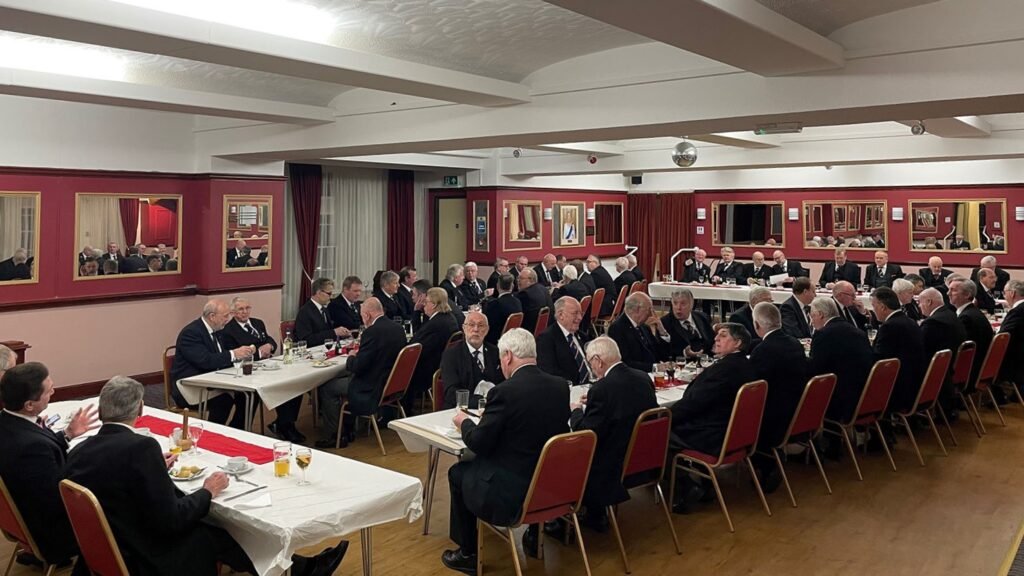
The Festive Board serves a purpose deeper than simply feeding hungry brethren after a meeting. It forms one of the strongest social pillars of Freemasonry, and for good reason.
1. Fellowship and Brotherhood
The Festive Board creates an environment where you can sit side-by-side with a newly-initiated Brother, a Provincial Officer, or a visiting Mason from a different Lodge, and speak freely. The equality of the dining table mirrors the equality of the Lodge: we meet “on the level.”
2. A Place for New Members to Settle In
The Lodge room can be intimidating for a new Brother or Companion. But at the dining table, conversation flows more naturally. A nervous initiate may feel lost in the ritual, but at the Festive Board he finds friendly faces, reassuring words, and a social atmosphere that helps him understand he belongs.
3. The Living Extension of Our Ritual Principles
Freemasonry teaches us charity, patience, kindness, respect, and harmony. The Festive Board is where those virtues become lived behaviour rather than spoken ideals.
4. Strengthening the Identity of the Lodge or Chapter
Each Festive Board carries the flavour and personality of its Lodge. Some emphasise humour, others tradition, some warmth, and some ceremony. This creates a shared culture that members grow proud of.
5. Welcoming Visitors
Visitors are essential to Masonic life. They bring new stories, different ritual workings, and fresh perspectives. The Festive Board gives Lodges and Chapters the opportunity to show hospitality, one of the oldest virtues of the Craft.

Structure of the Festive Board
Grace:
A short prayer of thanks opens the meal. It is non-denominational and reminds us of gratitude and humility.
The Toast List:
The toast list varies, but most Festive Boards include some form of the following:
- The Loyal Toast – honouring the King
- Toast to the Grand Master
- Toast to the Provincial Grand Master / Metropolitan leadership
- Toast to the Worshipful Master or the Principals in Chapter
- Toast to the Visitors and a response from one of them
- Toast to Newly Made / Exalted Members
- Toast to Officers and Members of the Lodge or Chapter who aided in the ceremony
Each toast serves a clear purpose: to show respect, to acknowledge leadership, to honour guests, and to thank those who serve the Lodge.
Raffles and Fundraising:
Before the evening reaches its close, but after the main toasts, many Lodges and Chapters hold a light-hearted raffle or other small fundraising activity. These add fun and excitement to the evening while raising money for charity, Festival appeals, or local causes. A single raffle can raise an impressive amount, showing how even small gestures can make a meaningful difference.
Fire:
Some toasts are accompanied by Masonic fire, the distinctive rhythm of claps or gestures that add ceremony, energy, and unity to the Festive Board.
The Tyler’s Toast:
Always the final act of the night, the Tyler’s Toast brings the Festive Board to its formal close:
“To all poor and distressed Masons, wherever dispersed over the surface of the earth, on land, sea, or in the air…”
Given without fire, or on the cuff, it is reflective and humbling. After the Tyler’s Toast is delivered, the Festive Board is officially concluded, and brethren are free to depart or continue socialising informally. I have spent many a late night in the bar with a select few who stick around after the majority leave to go home.
My Own Experience: A Moment of Unexpected Growth
Recently, during the centenary meeting of my Chapter, I found myself in a setting I never imagined feeling so comfortable in. The Provincial Grand Master and his team were present, the dining room was full, and the atmosphere was lively and warm.
At one point during the Festive Board, I stood up to take a picture of the room and top table to remember this occasion, not just for myself, but for the Brother from my Lodge that had just been Exalted, I glanced down the room, and I saw: Companions laughing, The Provincial team in high spirits, Old friends reunited, Visitors joining conversations with ease, A Chapter celebrating 100 years with pride. And then I felt something profound. I was at ease. I was happy. and noticed myself smiling uncontrollably.
This meant something to me.
Not long ago, the thought of entering a room full of strangers felt overwhelming. Speaking to new people, making conversation, or even simply being present used to bring anxiety. Yet here I was, not just coping, but enjoying myself. The fear had fallen away. In its place was confidence, comfort, and genuine connection.
Freemasonry didn’t force that change, but it created the environment where it could happen naturally. That moment at the centenary Festive Board will stay with me for the rest of my Masonic journey.
Why the Festive Board Still Matters Today
In a modern world where many feel isolated despite constant digital connection, the Festive Board offers what technology cannot:
- real human interaction
- genuine conversation
- shared experiences
- community
- continuity
- tradition
- belonging
It reminds us that Masonry is not just a system of morality or a sequence of rituals, it is a fraternity of people, united in purpose and companionship. The Festive Board is where that truth becomes unmistakable. It is where strangers become friends, where laughter breaks down barriers, and where the lessons of the Lodge room quietly settle into the heart. Around the table we see the Craft at its most human and its most sincere: Brothers supporting one another, sharing stories, offering guidance, and enjoying the simple pleasure of good company.
For many, the Festive Board is where the Craft becomes personal. It is often the moment when a new Mason stops feeling like a visitor and starts feeling like a Brother. It is where confidence grows, where belonging is felt, and where the real bonds of Freemasonry are forged, not through obligation, but through warmth, acceptance, and genuine fellowship. Long after the ritual fades, it is these moments of shared meal, shared laughter, and shared humanity that stay with us. And, for many of us, it is at the Festive Board where we first realise that Freemasonry is not something we simply attend — it is something we become part of.
I wanted to share this part of Masonry more openly with the non-Masonic community. Too often, people on the outside imagine Freemasonry to be secretive, distant, or closed off. Yet the Festive Board shows the complete opposite. It reveals the Craft as it truly is: warm, welcoming, good-humoured, generous, and grounded in genuine friendship. By showing this side of Masonry, the human side, the social side, the side built on companionship rather than ceremony, I hope to break down some of the misconceptions that surround us. And perhaps, for those who are curious about what Freemasonry is really like, this glimpse into the Festive Board may be the encouragement you need to take that first step and discover a fraternity that could one day feel like home.
Sources & Further Reading
1. Premier Grand Lodge of England – Formation and Early History
https://en.wikipedia.org/wiki/Premier_Grand_Lodge_of_England
2. Harrison, David. “Festive Boards and Table Lodges.”
https://dr-david-harrison.com/freemasonry/festive-boards-and-table-lodges/
3. Provincial Grand Lodge / Chapter Websites
Example: https://hiowmasons.org/
4. United Grand Lodge of England – Discover Freemasonry
https://www.ugle.org.uk/discover-freemasonry
5. Quatuor Coronati Lodge No. 2076 – AQC Papers
https://www.queensparkweb.org.uk/qc2076/