
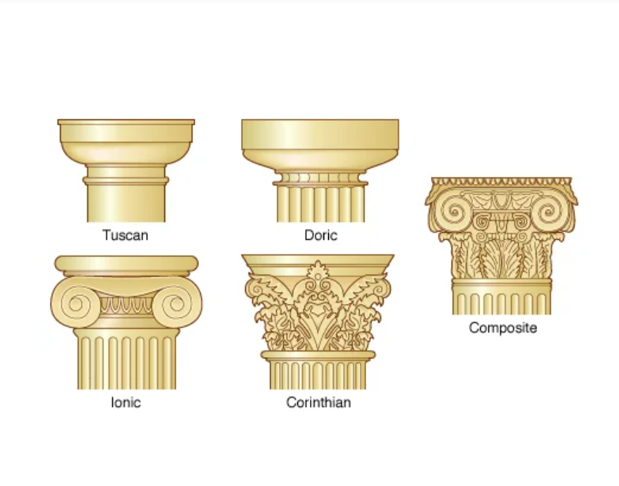
When I first heard the phrase “The Five Noble Orders of Architecture” mentioned during the Second Degree Tracing Board, I thought it was just a term for fancy buildings, and I didn’t really know what it related to. Over time, I have come to understand them and their connection to freemasonry.
Those Orders, Tuscan, Doric, Ionic, Corinthian, and Composite, aren’t simply classical column styles from the ancient world; I have come to find that in Freemasonry, they carry deep moral symbolism. They form part of the Fellow Craft’s education in proportion, balance, and harmony, lessons not only in building, but in self-building. The more I reflected on them, the clearer it became that they speak less about temples of stone and more about the structure of one’s own character.
The Tuscan Order – The Strength of Simplicity
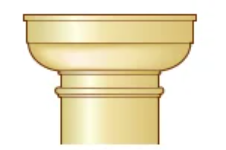
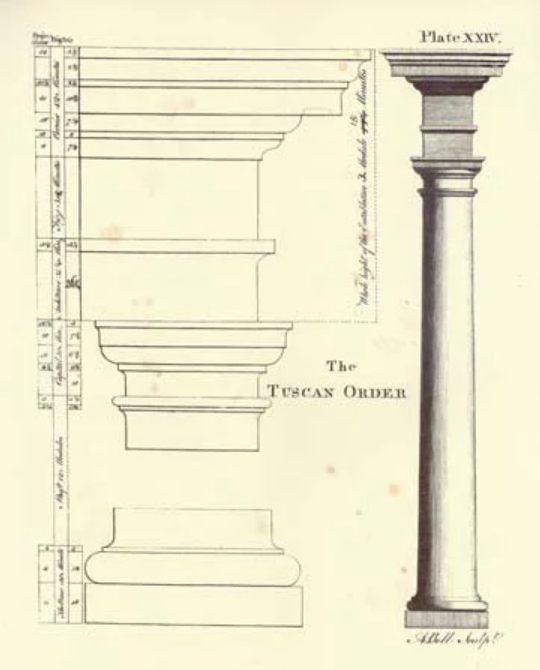
The Tuscan Order is the simplest and sturdiest of them all. It originated with the Romans, who adapted it from the earlier Greek Doric style but stripped away the ornamentation. The column stands unfluted, with a plain base and capital, and the entablature above it is equally unembellished.
To the speculative Mason, the Tuscan Order represents strength, but not the kind of brute strength found in muscle or might, rather, the strength of simplicity and integrity. It reminds us that a good foundation in life and in Masonry does not need to be ornate; it only needs to be true.
In the same way that the Tuscan column supports great weight through honest solidity, the Mason is encouraged to build his life upon principles that are unshakable and plain, truth, honour, and fortitude. As the first of the Five Orders, it teaches that before beauty or refinement can come, there must be stability.
The Doric Order – Strength with Dignity
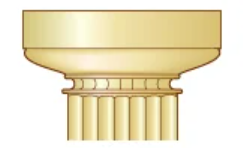
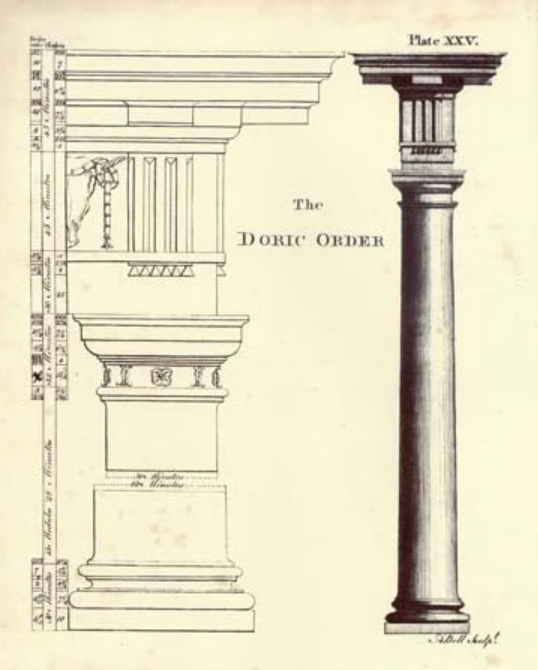
Next comes the Doric Order, often considered the oldest and most dignified of the Greek styles. The Doric column is sturdy and fluted, with a plain capital and no base in its pure Greek form. It evokes a sense of permanence, like something carved from the living rock of the earth.
In Freemasonry, the Doric Order reinforces the idea of strength and stability, but adds a touch of discipline and order. The Greeks associated it with masculinity and fortitude; it was the preferred style for temples dedicated to warrior gods such as Hercules.
Within the Craft, this order encourages the Mason to cultivate moral fortitude, the inner strength to remain upright and unwavering in principle. The Doric column is beautiful not because of ornamentation, but because of proportion and balance. Likewise, the virtuous Mason is admired not for outward show, but for steadiness of character and firmness in adversity.
The Ionic Order – Wisdom and Balance
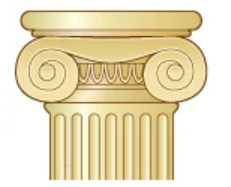
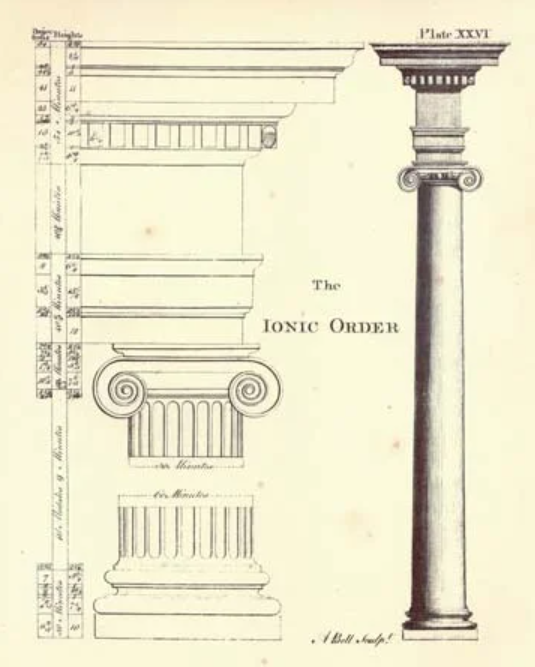
The Ionic Order is a gentler form of beauty. Originating in Ionia (modern-day Turkey), it stands apart for its graceful proportions and distinctive volutes, the scroll-shaped ornaments that decorate the capital. The shaft is slimmer, fluted, and rests upon a moulded base, giving it a sense of poise and intellect.
To the Freemason, the Ionic Order symbolises wisdom. Its elegant design reflects the harmony of thought, reason, and learning, all virtues central to the Fellow Craft Degree, where the liberal arts and sciences are explored. Just as the Ionic column balances grace with strength, so too must a Mason balance knowledge with humility.
Wisdom in Masonry is not about cleverness for its own sake, but the right use of knowledge. The Ionic reminds us that education, properly applied, refines the mind and elevates the soul. It’s a call to study the principles of proportion, both in architecture and in conduct, so that our words and actions are measured with care.
The Corinthian Order – Beauty in Refinement
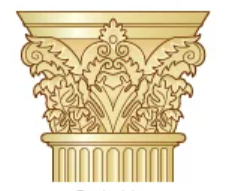
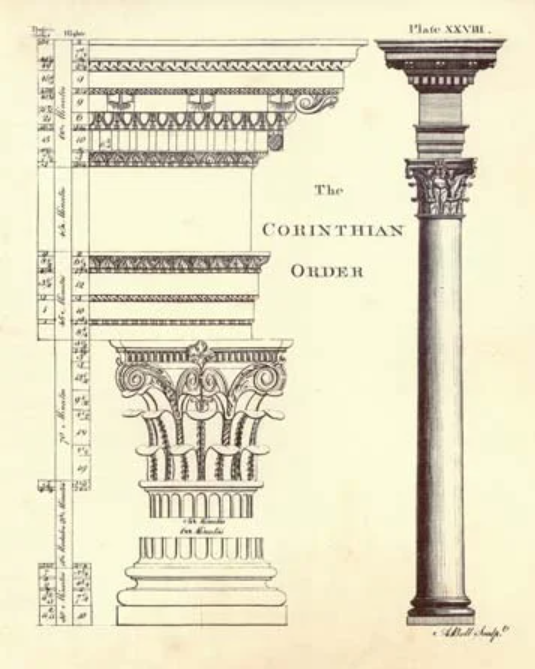
Of all the classical styles, none is more ornate or admired than the Corinthian Order. The Greeks developed it late, but it was the Romans who perfected it. Its capital is lavishly decorated with acanthus leaves, scrolls, and delicate details, creating an impression of living beauty carved into stone.
In Masonic teaching, the Corinthian Order represents beauty, not superficial decoration, but the beauty of refinement, discipline, and grace. It is the natural complement to strength and wisdom, forming the third of Masonry’s great pillars.
Just as the Corinthian craftsman must master his tools to produce intricate carvings, so must a Mason refine his inner life through reflection and practice. This order shows that true beauty arises when strength and wisdom are harmonised, when knowledge is guided by virtue and expressed with kindness.
In Lodge symbolism, beauty adorns the structure of Masonry just as the Corinthian column adorns a temple. It teaches us to find beauty in moral action, in courtesy, and in the way we shape our conduct toward others.
The Composite Order – Harmony and Perfection
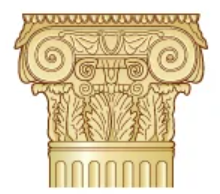
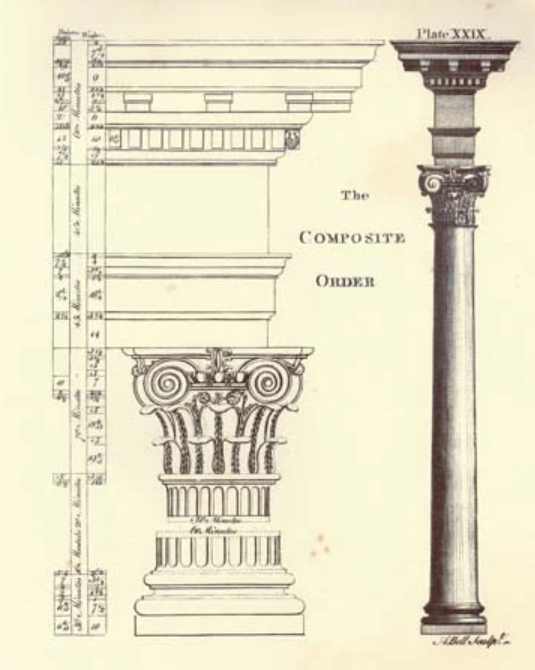
The fifth and final style, the Composite Order, was born of the Roman desire to combine the best of both the Ionic and Corinthian. Its capital unites the Ionic volutes with the acanthus leaves of the Corinthian, symbolising the perfect blending of grace and grandeur.
In Freemasonry, the Composite Order stands for perfection and harmony. It represents the unity of all that came before, strength, stability, wisdom, and beauty, merged into a single, balanced whole. The Composite teaches that when a Mason has laboured diligently upon his moral and spiritual edifice, the result is a harmonious character that reflects the best of all virtues.
It’s a fitting conclusion to the sequence, for Masonry itself is a synthesis, a blend of operative craft, moral philosophy, and spiritual aspiration. The Composite Order reminds us that the goal of Masonic life is not to excel in one virtue alone, but to bring all virtues into harmony.
From Architecture to Allegory
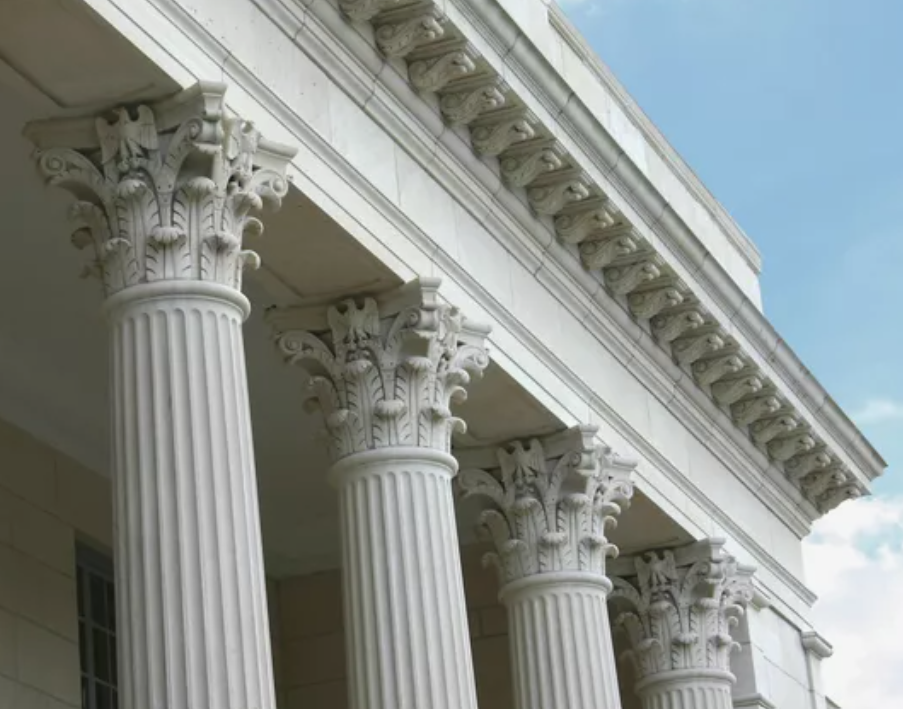
While most of us first hear the Five Orders as part of the Second Degree Tracing Board, their influence extends far beyond that lesson. You can see their symbolism echoed throughout Masonic architecture, in tracing boards, the design of Lodge furniture, and even the arrangement of pillars that support the Master’s pedestal.
To the uninitiated, they are mere styles of column; to the Mason, they are moral designs. Each Order builds upon the last, leading from simplicity to perfection, from the plain Tuscan to the complete Composite. They remind us that moral architecture, like physical architecture, progresses through stages: foundation, structure, refinement, and unity.
This sequence mirrors our own progress through the degrees of Masonry. In the Entered Apprentice, we are given the tools to lay a foundation; in the Fellow Craft, we learn proportion and order; and as a Master Mason, we are invited to see how beauty and wisdom lead to completion.
The Five Noble Orders serve as a bridge between the operative and speculative sides of Masonry. The medieval craftsmen studied these architectural principles for practical building; we study them for the building of character.
Masonry as the Architecture of the Soul
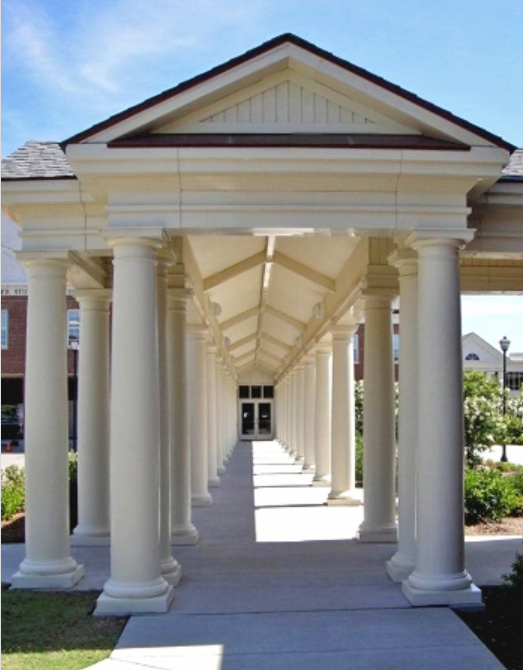
If we step back and look at these five forms not as columns, but as stages of personal development, their symbolism deepens even more. The Tuscan and Doric remind us to build upon strength and virtue; the Ionic teaches us the value of education and balance; the Corinthian perfects that education through beauty; and the Composite harmonises it all into unity, the complete and balanced Mason.
Freemasonry teaches that the Great Architect’s temple is not of stone but of living men. Each of us is both the builder and the building, shaping our character through the application of Masonic principles. The Five Orders, then, are not relics of ancient architecture, but signposts on the journey of self-improvement.
When we contemplate them, we’re reminded that every stone in the temple of character must be squared by truth, strengthened by wisdom, and polished by the beauty of virtue. Only then can we stand upright as living columns in the great spiritual edifice that Masonry seeks to raise.
Conclusion
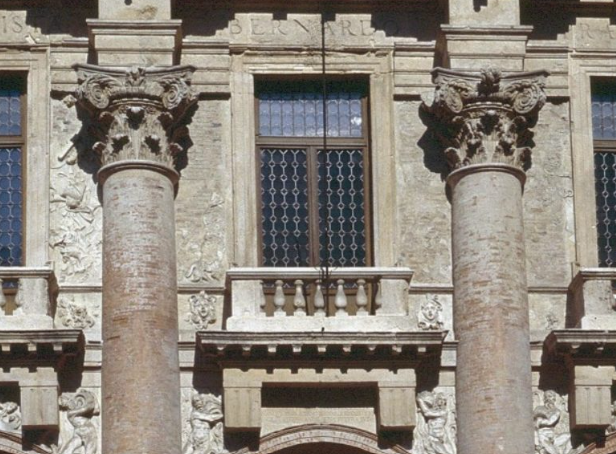
The Five Noble Orders of Architecture are not merely a study in classical design, they are a moral language that transcends time. From the plain strength of the Tuscan to the harmonious perfection of the Composite, they chart the journey of human development in both art and spirit.
For the Freemason, their message is timeless: build well, proportion your life with care, and strive always for harmony between strength, wisdom, and beauty. When those three are in balance, the result, like the Composite column, is perfection in form and purpose.
And that, perhaps, is the ultimate lesson of the Second Degree: that we, too, are temples in progress, designed by the Great Architect, and raised stone by stone in the pursuit of moral and spiritual excellence.
Sources
- United Grand Lodge of England, Emulation Ritual (Latest Edition) — Explanation of the Second Degree Tracing Board.
- Preston, William. Illustrations of Masonry. London, 1772 (and subsequent editions).
- Anderson, James. The Constitutions of the Free-Masons. London, 1723.
- United Grand Lodge of England Museum and Library, Masonic Symbolism and Tracing Boards (Curatorial Notes, 2018).
- Henderson, Kent & Pope, Tony. Masonic World Guide: A Comprehensive Directory of Lodges and Rituals. Lewis Masonic, 1984.
- Wilmshurst, W. L. The Meaning of Masonry. London: Rider, 1922.
United Grand Lodge of England, Book of Constitutions (Latest Edition).